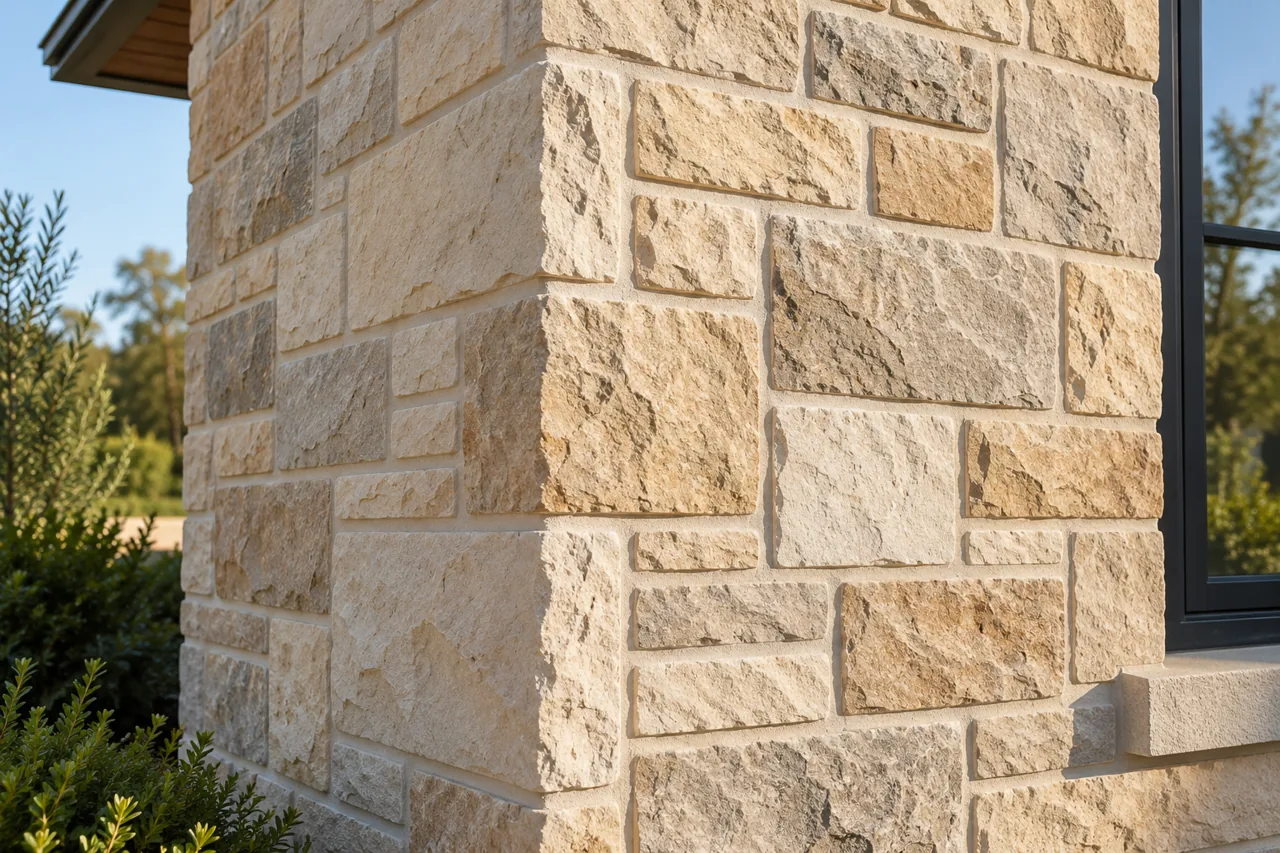
Natural Thin Stone Veneer Installation in Round Rock, Texas
Round Rock Stone Veneer helps you plan natural thin stone veneer installation in Round Rock, Texas, for exterior walls and accents. We focus on quarried stone choices, cut patterns, corners and joint treatments, then connect those choices to the wall assembly. Thin veneer and full-depth masonry require different support considerations.
Our focus is Round Rock. For a project in nearby Hutto, Pflugerville, Georgetown and Cedar Park, include the property address with your inquiry so coverage and access can be confirmed for the work you have in mind.
Compare the stone itself, the pattern it creates and the pieces needed at corners as connected choices.
Limestone palettes and surface finishes
Limestone can bring a pale, warm or gray palette to a facade, with variation between pieces that a small photograph cannot represent. Lueders is one material family to compare through physical samples, not a guarantee that every supplier has the same color available. Look at the face texture beside retained brick, stucco and roofing. Request the actual proposed stone and finish in writing so later selections do not change the intended appearance.
Rectangular coursing and mixed-size layouts
Regular courses create a different rhythm from a mix of heights and lengths. The choice affects how joints line up around windows and how the pattern turns corners. Review enough stones together to judge that arrangement, with the intended mortar rather than a bare stack alone. Small accent areas deserve particular attention because their limited width can make awkward cuts or repetitive joints more noticeable.
Corner units, returns and full-depth transitions
Thin face pieces and matching corner units can produce a coherent return where the wall turns. Identify every outside corner, opening return and exposed end before quantities are prepared. Where existing full-depth stone remains, the new facing needs a deliberate transition in thickness and pattern. Do not assume thin veneer can reproduce every structural detail of full-depth masonry; support and attachment must be assessed for the proposed assembly.
Compare installed scope rather than stone alone
A material allowance does not explain the whole installation. Include the selected product, corner quantities, preparation, backing, moisture management and work around openings in the proposal. Existing finishes may need removal, and concealed repairs should have an agreed way to be assessed and priced. We recommend keeping sample approval separate from assumptions about availability: the required quantity and matching corners must be confirmed for the actual order. For a facade, view the chosen pattern across openings and long wall runs. For columns, give particular attention to corner pieces and how the pattern fits each narrow face. Interior rooms, paving and structural masonry are outside this exterior veneer scope.
Discuss your natural thin stone veneer installation project
Gather exterior photos, rough areas and any stone samples or supplier references you like. Include corners and returns, retained materials to match, and whether the project replaces an existing finish.