Exterior Stone Veneer Installation in Hutto, TX
Round Rock Stone Veneer helps you plan exterior stone veneer installation in Hutto, TX, for house facades, porch columns, chimney exteriors and outdoor features. Compare natural thin stone, manufactured veneer and mechanically fastened stone panels, then choose the finish and attachment suited to the surface. Our focus stays on exterior facing, including recladding and accents, with the wall behind the stone included in the planning discussion.
Start by deciding which existing materials should remain visible. Adding a stone entrance to a newer house is a different decision from covering original brick on an older facade. The same distinction matters at a small porch or outdoor feature: a finish can change without rebuilding the structure, but its thickness, edges and support still need to be worked out before installation.
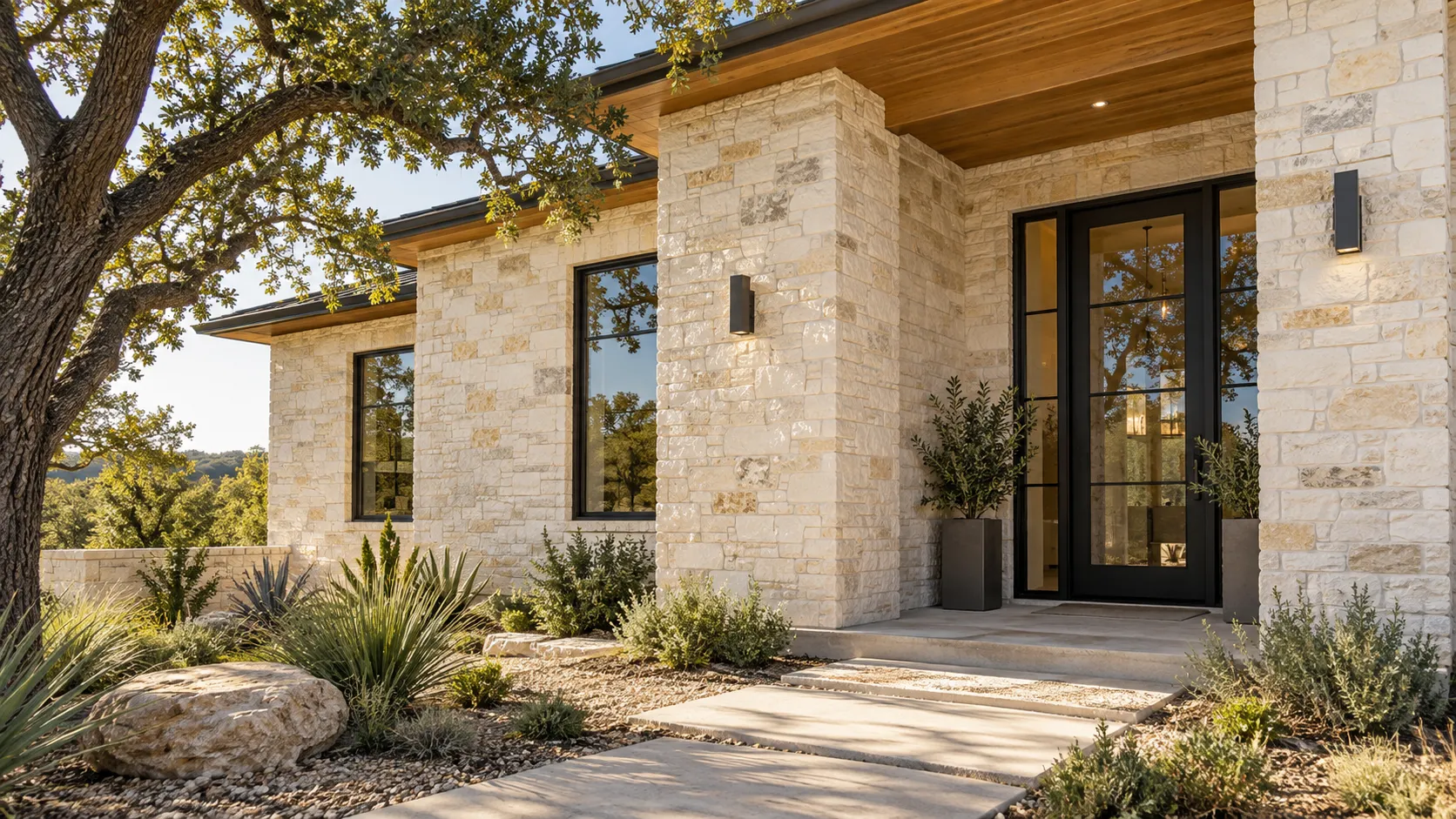
Stone veneer choices in Hutto
House facades, wainscoting and porch columns
A stone wainscot gives a house a defined lower band; a full front elevation changes how every window and door sits within the finish. On a porch column, corners and caps can be more noticeable than the flat face. Compare those arrangements before settling on a product, and ask to see how its units turn a corner rather than relying on a photograph of a broad wall.
For a Hutto recladding project, identify the original siding or masonry, any removal proposed and the surfaces that will remain. New stone should have a deliberate endpoint at trim and adjoining finishes. Our Exterior Stone Facades and Wainscoting guide explores these layouts. If the project affects an older building in Old Town, establish the property's review status before treating its existing facade as a surface available for covering.
Exterior chimney and chase cladding
Exterior chimney cladding can connect a roof-level feature to stone at the entrance, but it is more than a color-matching exercise. A framed chase, an existing masonry chimney and an area already faced with stone need different assessments. Identify what will be retained and how the proposed veneer will meet the top cap and roof junction.
If existing facing is being replaced, the work should allow examination of the exposed backing and the condition around those junctions. Covering a stain or crack with new stone does not explain its cause. Ask how removal and reinstatement around the roof will be coordinated, including any separate flashing work. The cladding scope concerns the exterior finish; flues, fireboxes, appliances and structural chimney repairs require their own appropriate specialists. That boundary should be clear in the written proposal before access equipment is arranged.
Outdoor kitchens, fireplaces and garden features
A garden wall, gate pier or mailbox surround can repeat a stone palette from the house without requiring every feature to be identical. The scale of the stone matters: a broad wall allows a pattern to develop, while a narrow pier has short faces and frequent corners. Include the top and base in the design so the finish ends cleanly and works with the underlying structure.
On an outdoor fireplace or kitchen island, record cabinet doors, vents, appliance openings and countertop connections before ordering veneer. The finished thickness changes the relationship between those parts. This is facing for suitable structures, not complete kitchen construction, utilities or paving. If the base or wall is new, agree which contractor prepares it and how the veneer installer confirms that it is ready. Keep any structural design separate from the decorative choice.
Storefront and commercial entrance accents
For a Hutto storefront, start with an elevation showing the entrance, windows, signs and the proposed stone area. A lower facade or entrance accent can be a limited scope, but it still needs coordinated terminations and access around the building. Confirm the finished depth beside door frames and sign attachments before approving a material sample.
Old Town deserves particular care with existing surfaces. The city's description of its historic commercial core identifies brick buildings and storefronts of wood, glass and brick. That is a reason to investigate what should be retained, not a reason to assume stone is an appropriate replacement. For a new commercial exterior elsewhere, the project drawings and selected wall assembly guide the finish. This page covers exterior veneer only; interior lobby work and general masonry restoration are separate services.
Material changes and Old Town project scope
Hutto's Historic Preservation guidance distinguishes new construction visible from the public street in Old Town from ordinary maintenance that leaves material, dimensions, configuration and appearance unchanged. It also addresses exterior modifications and additions to contributing structures. A proposal to replace another finish with stone should therefore be described as the actual material change, not casually labeled an in-kind repair.
Ask Planning staff about the property's status and the proposed elevation before ordering material. A Certificate of Appropriateness, where required, addresses the preservation review; it does not replace a separate building-permit requirement. Keep any approved drawing or material selection aligned with the installation scope, and check with staff before making a change that affects that approval.
For material research, Hutto-based Cast Limestone Products of Texas lists architectural veneers along with sills, surrounds and caps. Those categories can help you distinguish a wall facing from a separately detailed trim component. They are not all automatically the same as thin adhered stone veneer. A coordinated exterior may use more than one type of stone product, so the proposal should identify each one and explain how it is supported and joined to the surrounding construction.
Compare complete stone veneer proposals
Natural stone, manufactured veneer and attachment
Natural thin veneer is quarried stone prepared for facing. Cement-based manufactured veneer offers molded profiles, while mechanically fastened stone panels use a different attachment approach from individually adhered units. Compare appearance and installation together: corners, panel joints, backing and trim need to suit the selected system rather than being borrowed from another product's detail.
A useful sample includes several units and the intended mortar treatment. That shows the overall texture more clearly than one loose piece and helps compare stone with retained brick or siding. For adhered manufactured veneer, CMHA guidance emphasizes preparation and integration of water-resistive barriers with flashing, openings and adjoining cladding. Follow the selected product's applicable details. The new stone should not be expected to conceal an unsuitable backing or replace the wall's moisture-management work.
Ask for a proposal that identifies removal, preparation, the selected facing and all exposed boundaries. Distinguish veneer from cast trim, caps or other components when those are part of the design. If original material is to remain, show exactly where the new finish stops and how the adjacent surface will be protected.
Include access and coordination with other trades in the same discussion. A roof-level chase and a low porch base may share a product but require different working arrangements. Agree how concealed defects will be documented and priced, and who handles any property-specific review. A clear division of those responsibilities is more useful than comparing quotes that use the same word stone for different assemblies.
For another property where matching an established stone exterior is the priority, Exterior Stone Veneer Installation in Georgetown discusses texture, scale and historic-property considerations.
Frequently asked questions
Does every project in Hutto need the same approval?
No. Hutto's Old Town guidance depends on the location, designation, visibility and type of work. A visible new structure or change to a contributing building is different from maintenance that preserves the existing material and appearance. Describe the proposed stone work to Planning and Building staff, and confirm the reviews needed for that address. Do not assume one approval covers every part of the project.
Can I keep the existing wall finish behind new veneer?
Only if the existing construction and selected installation system support that approach. The installer must assess the surface, coatings, condition and backing rather than assume an old wall can receive adhered stone directly. On a historic property, retaining or covering the visible material is also a design-review question. Resolve both the technical and property-specific issues before approving the preparation scope.
What should I include in a stone veneer inquiry?
Include the Hutto address, overall photographs, the current exterior material and the surfaces you want to change. Add approximate dimensions and examples of stone profiles or trim you like. Say whether the property is in Old Town or has an existing review decision, if known. Identify separate structural, appliance or utility work, and confirm installer coverage before arranging a visit.
Plan your Hutto project
Prepare your exterior veneer request using the form below. Include the Hutto location, retained materials and proposed stone areas so the next discussion can distinguish facing, trim and preparation work. Add any relevant property-review information already available. Phone coming soon.