Exterior Stone Veneer Installation in Georgetown, TX
Round Rock Stone Veneer helps you plan exterior stone veneer installation in Georgetown, TX, including facades, porch columns, chimney cladding and outdoor feature faces. Natural thin stone, manufactured veneer and mechanically fastened panels offer different ways to create the finish. For new work or recladding, begin with the surface and the intended relationship to the materials already on the building.
Matching stone involves more than finding a similar shade. Unit sizes, surface texture, mortar joints and the arrangement around corners all affect how a new section relates to an existing exterior. Decide whether you want a close visual match or a clearly defined new accent, then show that intent in the project brief. On a historically reviewed property, establish the permitted approach before selecting replacements.
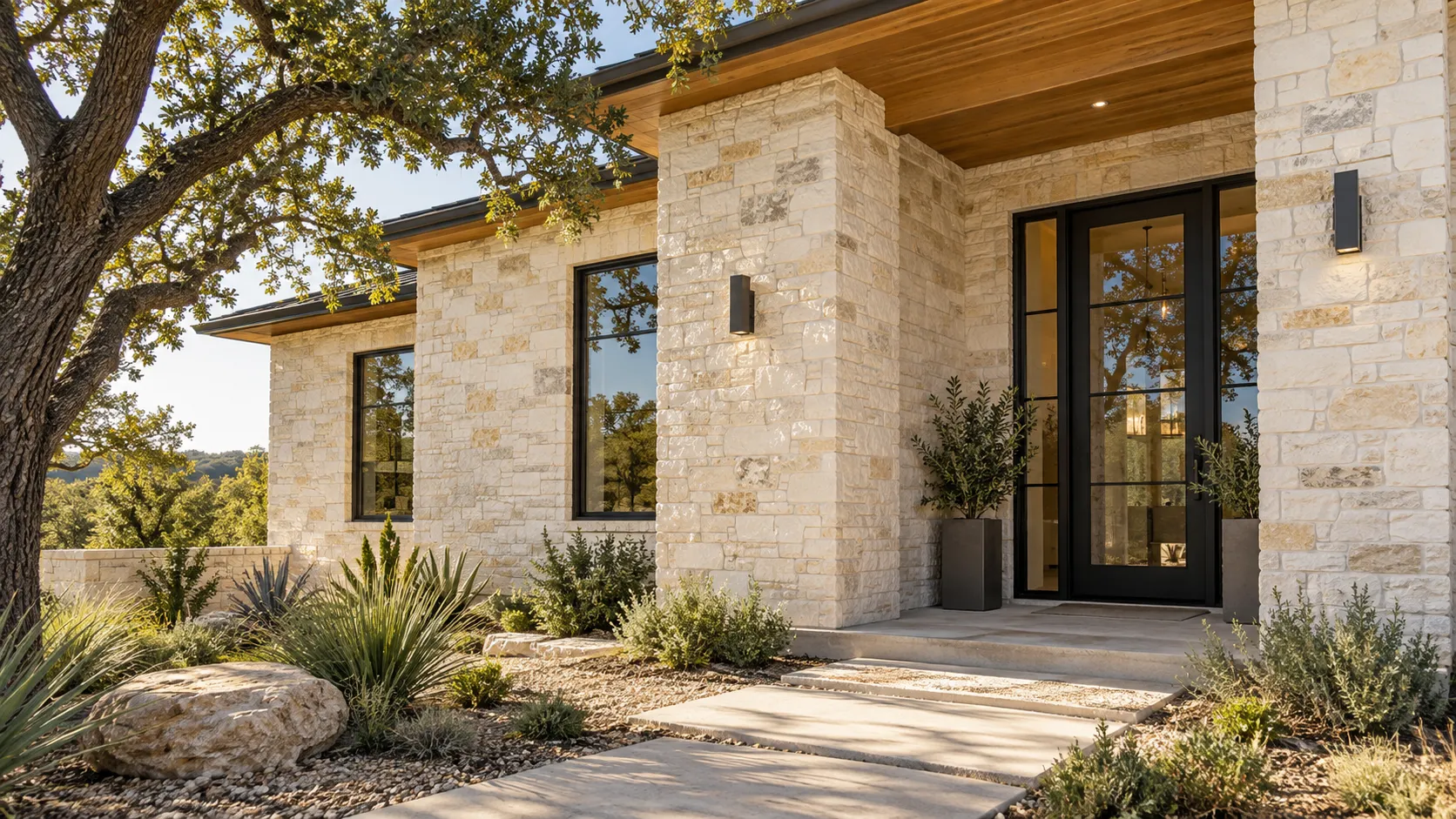
Stone veneer choices in Georgetown
House facades, wainscoting and porch columns
When extending an existing stone facade, compare the whole pattern rather than one attractive piece. Take photographs of several areas, including corners and the junction beneath a window. A proposed stone may resemble the old face in color but produce a different rhythm when its unit sizes or joints change. A sample panel can help reveal that difference before installation.
For a new wainscot or porch-column wrap, establish a deliberate boundary with the rest of the house. Show the height, end returns and top treatment on the design, particularly where the stone meets retained siding or brick. Our Exterior Stone Facades and Wainscoting guide explains these layout choices. The quote should also distinguish thin veneer from full-depth masonry and identify what preparation or support the actual wall requires; a visual match alone does not establish a suitable assembly.
Exterior chimney and chase cladding
If the house already has stone below the roofline, a chimney or framed chase may be the most conspicuous place for a mismatch. Compare the selected cladding at the distance from which the feature is normally seen, while still checking corner pieces and top-edge details close up. It may be more coherent to make the chimney a defined accent than to promise an exact match that available samples do not support.
The installer also needs to assess the backing and how the finish meets the roof and cap. Replacement work should identify what must be removed to inspect those connections and who restores any affected flashing. Veneer is an exterior finish, not a repair for an unstable chimney or defective flue. Keep appliance, firebox and structural work separate so a material-selection discussion does not obscure the cause of an existing problem.
Outdoor kitchens, fireplaces and garden features
Stone on a garden wall or gate pier can connect an outdoor space to the house while using a simpler arrangement. Compare how the units fit the smaller faces and exposed ends. A wall cap, pier top or mailbox opening should appear in the proposed detail, not be left as an unspecified finishing item.
Outdoor kitchens and fireplaces add more interfaces. Cabinet access, vents, appliance openings and countertop edges need to remain functional after the new facing changes the finished dimensions. If a contractor is constructing the base, coordinate it with the chosen veneer system before the cladding begins. The work described here is vertical facing on suitable structures; it does not include paving, utility installation or complete outdoor-kitchen construction. For an existing retaining wall, establish its condition and structural needs independently of the decision to give it a new stone face.
Storefront and commercial entrance accents
For commercial entrances, define the visual role of the stone before comparing materials. A storefront base, a doorway surround and a monument-sign base each have different edges and attachments. Show how the proposed finish relates to doors, glazing and signs, including any fittings that must move outward to accommodate its thickness.
On a Georgetown property within a historic overlay, the building's existing materials and applicable design guidelines form part of that decision. A new finish should not be selected solely because it looks similar in a supplier photograph. Elsewhere, project drawings and the specified wall system still need to agree. Keep occupied entrances and material staging in the work plan, and make clear which adjacent trades are included. This is an exterior scope, without interior lobby facing or general masonry-repair work added to it.
Existing materials and Georgetown historic review
Georgetown's Historic Planning staff reviews projects in the city's historic overlay districts under the Unified Development Code and Historic District Design Guidelines. The Certificate of Appropriateness process may involve the Historic Preservation Officer or the Historic and Architectural Review Commission. Begin by checking whether the property and proposed work fall within that review, rather than assuming every older house or every Georgetown address has the same requirements.
For a facade change, useful review material includes photographs of the existing building, the proposed stone areas and samples showing texture, scale and joints. Describe whether the work repairs an existing finish, replaces it or adds a new one. Those choices have different implications for what remains visible. Have any required approval reflected in the final installation scope before materials are committed.
Local stone resources can inform the material discussion without settling the design. Aguado Stone's natural thin-veneer guide identifies a Georgetown address and discusses installation and care considerations. Confirm current products and obtain the applicable guidance for the stone actually proposed. A historic or regional association with limestone does not guarantee an exact match, and a supplier's general guide does not establish approval for a particular property.
Compare complete stone veneer proposals
Natural stone, manufactured veneer and attachment
Ask a supplier or installer to identify the stone and finish, not just describe it as limestone-colored. Natural thin veneer comes from quarried material; manufactured veneer uses cement-based units. Mechanically fastened panels are another system with their own backing, fastening and trim details. Those differences matter even when the finished surfaces appear similar.
Compare the proposed material against retained surfaces using a group of pieces and the intended mortar. Include a corner or return if the new area wraps around a feature. Then examine the assembly behind it. For adhered manufactured veneer, CMHA guidance connects preparation and the water-resistive barrier with flashing and cladding transitions. Natural stone and panel systems need their own applicable instructions. Do not trade away those details to obtain a closer color match or assume that a thin facing can be installed like full-depth masonry.
A matching project benefits from a written record of what the sample represents. State the material, finish, joint treatment and areas to be covered, along with any agreed variation from the existing facade. Keep photographs of the accepted sample and retained stone with the project information.
The proposal should separately identify removal, backing assessment, required repairs and installation. If the new finish meets work by another trade, show the boundary and who completes it. Ask how concealed conditions or unavailable matching components will be handled before an alternative is substituted. Include access, protection of retained materials and the applicable care guidance. These decisions make comparison easier without treating every square foot of an intricate matching job as equivalent.
For a separate project combining house accents with outdoor feature faces, Exterior Stone Veneer Installation in Cedar Park discusses the distinction between decorative facing, site access and underlying construction.
Frequently asked questions
Does every project in Georgetown need the same approval?
No. A property's historic status and the proposed change matter, as does the rest of the construction scope. Georgetown provides a specific Certificate of Appropriateness process for work within its historic-review framework. Check the address with city staff and describe the material change accurately. A stone sample or contractor proposal does not itself establish that the work is approved.
Can I keep the existing wall finish behind new veneer?
The installer must evaluate it. Existing coatings, the wall's condition and the proposed attachment can affect whether removal or another preparation method is needed. If the visible material is part of a historically reviewed building, covering it is also a question for that review. Do not assume leaving a surface physically in place is the same as preserving its appearance or meeting the selected system's requirements.
What should I include in a stone veneer inquiry?
Prepare the Georgetown address, overall and detail photographs, and the areas you want faced. For matching work, include corners, mortar joints and adjacent finishes in the photographs. Identify the existing stone if records are available and explain whether a close match or a contrasting accent is intended. Add known review information and confirm installer availability for the property.
Plan your Georgetown project
Prepare a Georgetown stone veneer request below. Describe the existing exterior, what should remain and where new stone is proposed. Photographs and any material or property-review records will help keep the discussion specific to the intended finish and installation scope. Phone coming soon.